

Café · Leeds · ⭐ 9.7/10 · 502 reviews · updated: 2026-08-10 17:35:07
Address: Leeds Train Station, Leeds LS1 4DT, United Kingdom
Every list of a city’s best coffee quietly ignores the places most people actually buy coffee from, and station cafés are top of that list. Coffee Room is one of them: a platform-side counter inside Leeds railway station, run by the travel-catering operator that supplies most of Britain’s stations. Judged as a destination café it has nothing to say. Judged as what it is — the coffee you can get without leaving the platform — it is doing a job nobody else in the city can do.
Highlights
- Inside the station, on the platforms — the whole proposition is that you do not walk out of the gates, do not cross a road and do not gamble with your departure time.
- Operated by SSP — the travel food specialist behind counters at more than a hundred British rail stations, so the standards, the training and the supply chain are national rather than local.
- Built for speed — the format is a service counter for people carrying luggage, not a room designed to be sat in, and it is honest about that.
- Open around the railway day — a station café keeps railway rhythms, which means it is serving at hours when almost every independent in Leeds is shut.
- A predictable cup — the point of a travel brand is that it tastes the same in Leeds as it does three hundred miles away, which is a virtue when you are tired and in a hurry.
- Grab-and-go food — sandwiches, pastries and toasted things prepared for travelling rather than for a leisurely brunch.
What’s in the cup
This is where honesty matters more than enthusiasm. Coffee Room is a travel-catering brand, and it does not publish a roastery, an origin, or a sourcing story — so any description of terroir, farm relationships or seasonal lots would be invented. The right language for a counter like this is the language of consistency, not of provenance.
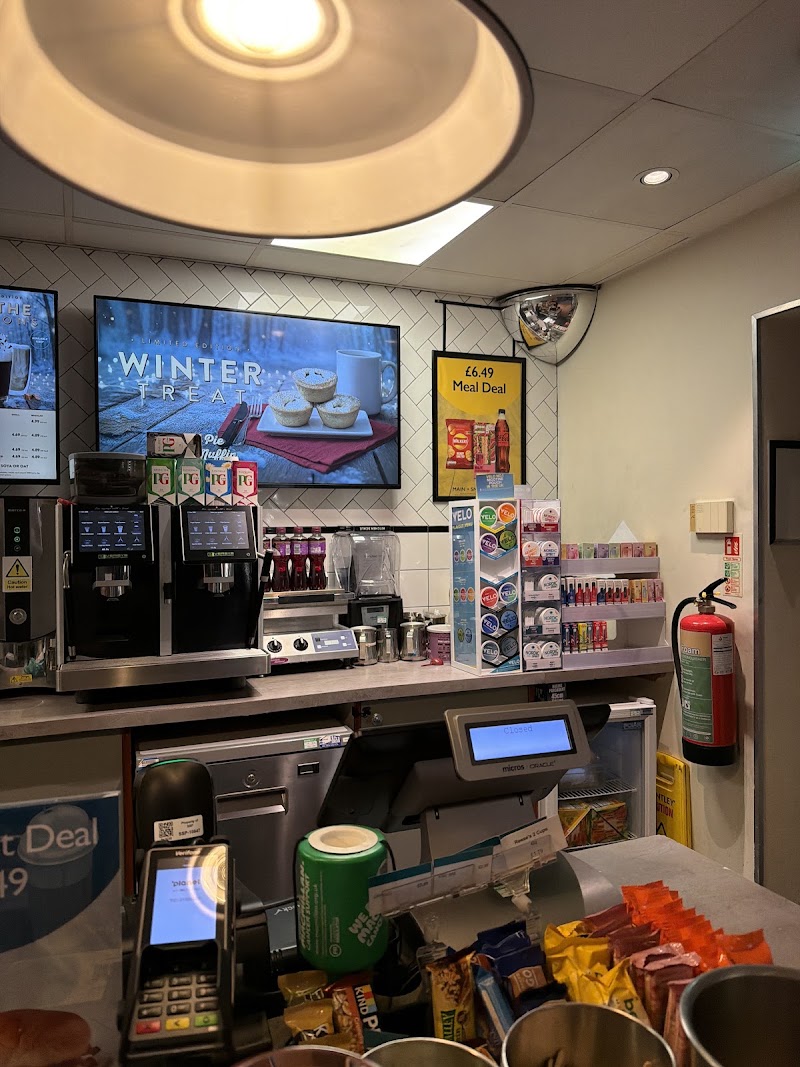
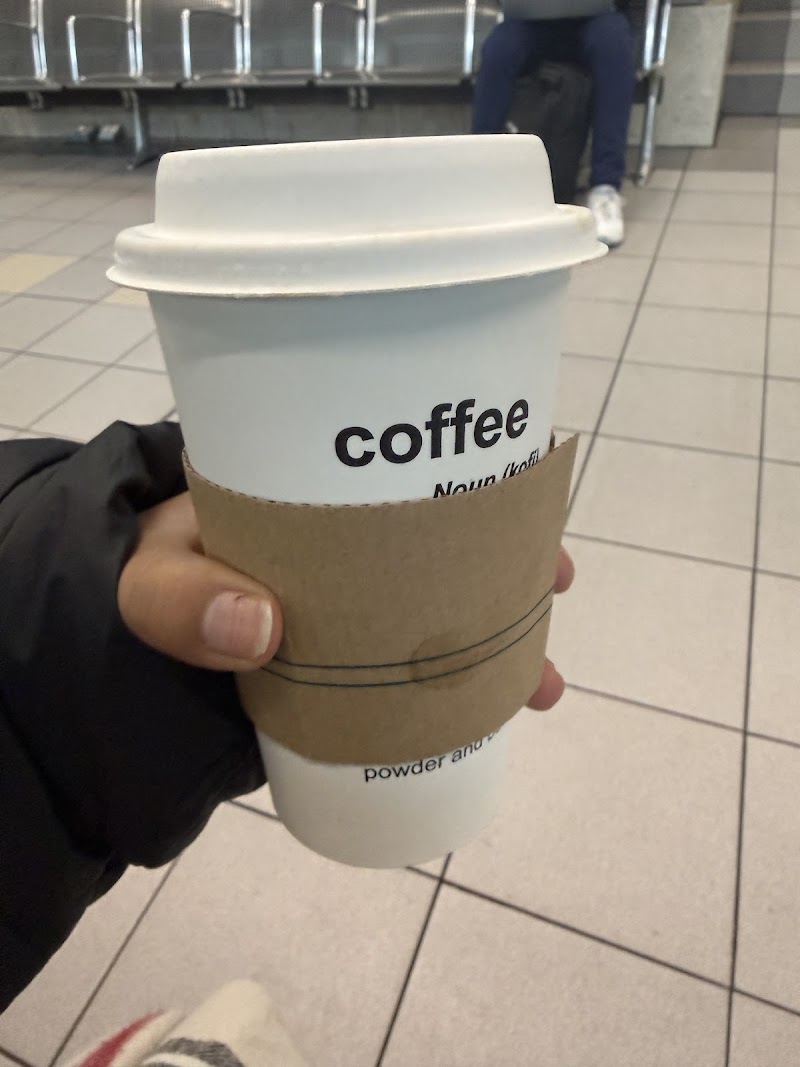
What that means in practice: espresso-based drinks made on automated or semi-automated equipment to a specification set centrally, with the same recipe, the same milk routine and the same cup in every unit the operator runs. The virtue being sold is predictability. You will not be surprised, in either direction. If your idea of a good coffee involves asking what the guest bean is, this is the wrong counter and it is not pretending otherwise.
It is worth knowing the wider context, because it is more interesting than the cup. The operator behind this counter runs a portfolio that includes its own coffee brands — including a chain it bought in 2022 that trades on fair-trade sourcing and compostable cups — alongside franchises of the big international names. Travel catering has spent the last decade being pushed towards better beans and better machines by passengers who now know what good coffee tastes like, and station coffee in Britain is measurably better than it was ten years ago. It is still not speciality coffee, and nobody involved claims it is.
The practical comparison is the one worth making. There is genuinely excellent independent coffee about a minute’s walk beyond the station gates. If you have twenty minutes, walk out. If you have five, or you have luggage, or the weather is doing what Yorkshire weather does, this counter exists for exactly that calculation.
Who’s behind it
The operator is SSP, which describes itself as the leading travel food provider in the UK and Ireland and trades under the banner of the “food travel experts”. It is not a local business and does not present itself as one: it runs counters in stations and airports across Europe, North America, Asia and the Middle East, and in Britain alone it operates at over a hundred rail stations.
Its portfolio is worth understanding because it explains what kind of business this is. The same company runs the pasty and sandwich brands you recognise from every concourse, owns a coffee chain it acquired in 2022, has launched a station café concept designed to feel local to each town it lands in, and franchises several international restaurant and coffee brands into travel locations. A counter like Coffee Room is one product in that portfolio: a house-branded café that fills a specific slot in a specific station.
That structure has consequences a customer can feel. Staff are trained to a national standard, the supply chain is centralised, the equipment is specified rather than chosen by a barista-owner, and the menu is set well above the level of the individual unit. You lose the personality of an independent and you gain the reliability of a system. In a railway station — where the customer is usually anxious about time and rarely coming back tomorrow — that is a defensible trade.
Who it’s for and what visit it fits
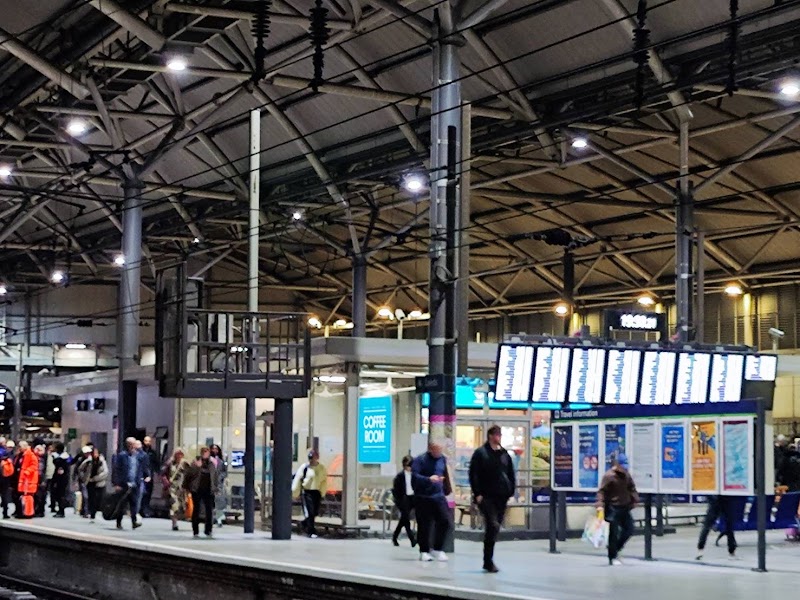
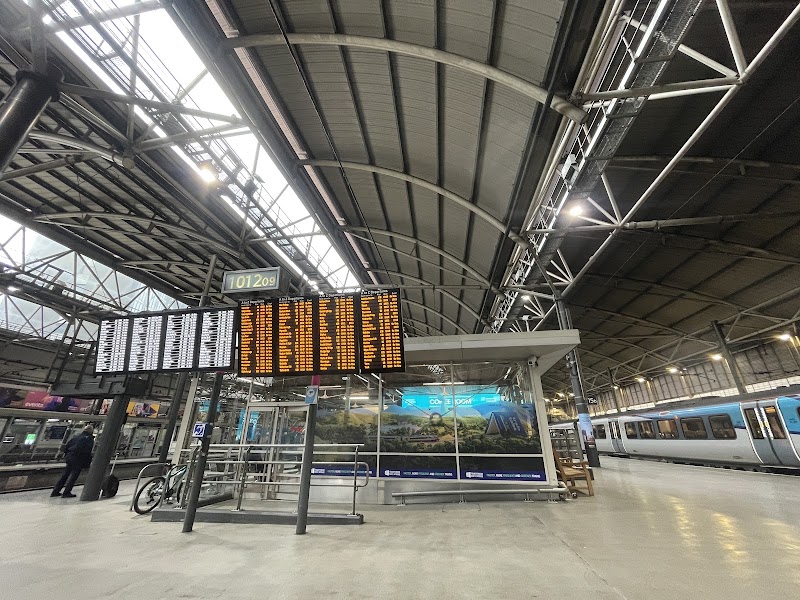
There is exactly one dominant scenario here and it is worth stating plainly: you have a train, and you do not have time. That covers more situations than it sounds like. It is the coffee before a departure when the board says your platform is already up. It is the interchange coffee — Leeds is one of the busiest railway junctions in the north, and a very large number of the people standing here are not visiting the city at all but changing between services. It is the coffee at an hour when the city outside is closed. And it is the coffee you buy because you are carrying two bags and a coat and cannot face negotiating a small independent café with them.
The second scenario is weather. A platform counter means you are not going outside, and in a northern English winter that is not a trivial benefit — especially with a delayed service and no idea how long the wait will be.
The scenarios this is not for are just as important. It is not a place to work: there is no room designed for sitting with a laptop, no promise of a socket, and the ambient environment is a railway platform. It is not a place for a conversation of any length. And it is not a place to introduce someone to Leeds coffee — for that, the independents a short walk beyond the gates are the whole point of the city’s reputation. Using a station counter for any of those visits is a misuse of it rather than a fault in it.
The room and the atmosphere
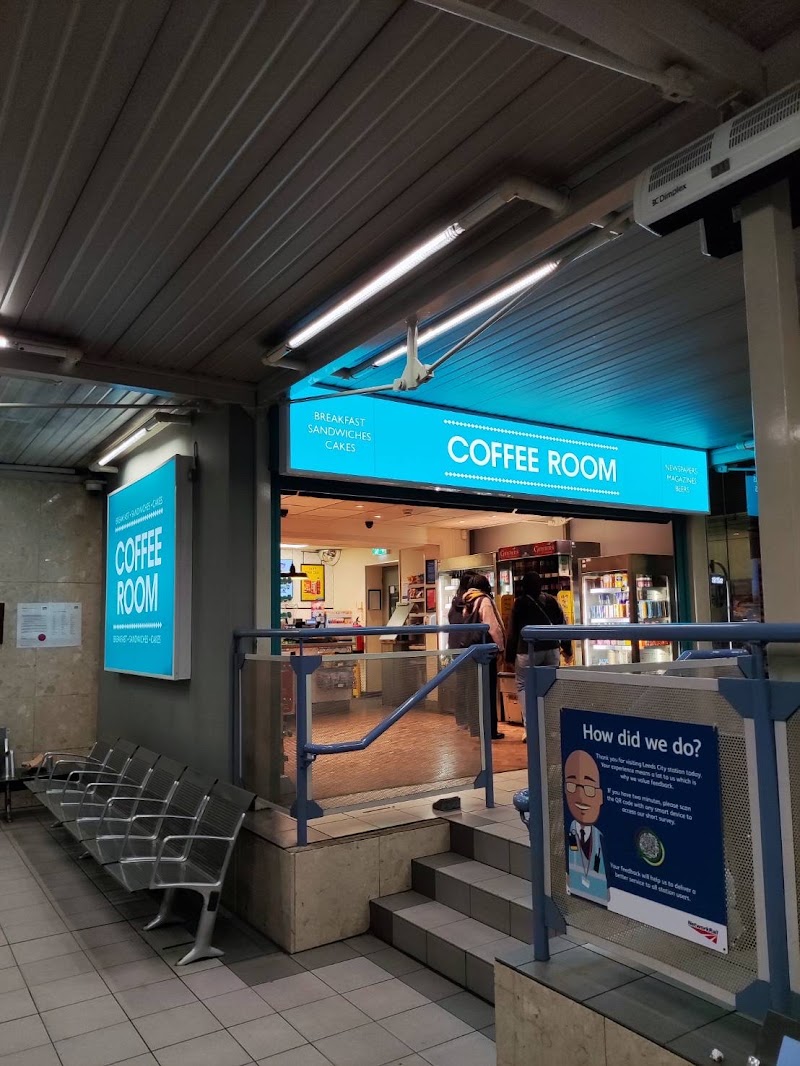
Be realistic about the format. This is a service counter in a station, positioned to catch passengers on the platforms rather than a room you enter and settle into. Seating, where it exists, is essentially the station’s — benches, ledges, the perch you find while watching the departure board. The atmosphere is the atmosphere of Leeds railway station itself: announcements, luggage wheels, a constant flow of people, and a background level of low-grade urgency that never quite goes away.
That environment is not a failure of design; it is the environment the business was built for. It also means the experience varies enormously with the hour. Early on a weekday it is a fast, quiet, professional transaction. During a major disruption, when several hundred people are stranded on a concourse at once, it is a very different and much less pleasant place to be standing.
The operator does not publish seating counts, accessibility details or a policy on dogs for individual units, and station outlets get moved, refitted and rebranded far more often than high-street cafés do. Check the station’s own signage on arrival rather than relying on any description of the layout, including this one.
What goes with the coffee
The food is travel-catering food, which is a genuine category rather than an insult: sandwiches, pastries, cakes and toasted items, prepared to be picked up and eaten on a train. Nothing here is baked in front of you, and the operator does not claim it is. The measure of quality in this category is whether it is fresh, correctly stored and available when you need it, and a national operator with a centralised supply chain is better placed to deliver that at an unpredictable hour than a small independent kitchen would be.
The one thing a station counter genuinely does better than any café in the city is availability. On an early departure or a late arrival, the choice is not between this and a good independent bakery — it is between this and nothing. That is worth remembering before judging it against a brunch menu it was never trying to compete with.
When to come
A station café runs on the railway timetable rather than the city’s. The peaks are the commuting peaks, and the worst moments are entirely predictable: the few minutes after a busy service arrives, and any period of disruption, when a queue forms out of nowhere. The calm stretches are the middles of weekday mornings and the flat part of the afternoon.
The practical rule is simple. If your train is already on the board and you have a few minutes, this counter is the correct choice. If you have longer than about a quarter of an hour, you are better served walking out of the gates into the city, where the coffee is a different proposition entirely. And if you are travelling at the very start or the very end of the railway day, this is likely to be the option that is actually trading.
Getting there
You do not travel to Coffee Room; you encounter it. It sits inside Leeds railway station on the platform side, which is both its advantage and its main limitation: it serves people who are already through the gates. If you are coming from the city with no ticket, plan on one of the many cafés immediately outside the station instead — including some of the best in Leeds, within a minute of the exit.
For anyone arriving by train, the station is the transport hub for the entire region: services run to London, across the Pennines, up to the north east and out into every part of West Yorkshire, and Leeds is one of the busiest interchanges outside the capital. Platform-side units are positioned for exactly that traffic. There is no underground in Leeds, and the bus network converges immediately outside, so the station is the single point through which most visitors arrive.
Good to know
Set your expectations by the format and you will not be disappointed. This is a station concession run by a national travel-catering operator: dependable, quick, unremarkable, and available when nothing else is. It is not a speciality coffee bar, it does not name a roastery, and it would be misleading to write about it as though it did.
The honest weaknesses are inherent. Queues at peak and during disruption can be long and slow. There is nowhere comfortable to sit that belongs to the café itself. And station units change hands and change branding regularly, so the counter you find may carry a different name from the one you remember — the operator behind it is usually the same. The genuinely useful piece of local knowledge is this: some of the best independent coffee in the city is roughly sixty seconds’ walk beyond the ticket gates. Whether that walk is available to you is the only question that decides where you should buy your coffee here.
Questions and answers
Is Coffee Room an independent café?
No. It is a station outlet operated by SSP, a national travel food company that runs counters at over a hundred British rail stations and in airports worldwide.
Whose coffee do they use?
The brand does not publish a roastery or a sourcing story. It is travel-catering coffee built around a consistent central specification, and it would be inventing things to describe it in speciality terms.
Is it inside the ticket barriers?
The counter is positioned platform-side to serve passengers, so plan on needing to be through the gates. If you are coming in off the street, the cafés immediately outside the station are the better bet.
Is there anywhere to sit?
Not in the sense a café means it. This is a service counter; the seating around it is the station’s own. Treat it as takeaway.
Can I work here?
No. There is no space designed for it, no promise of power, and the setting is an active railway platform. For laptop work, walk out of the station.
What food do they have?
Grab-and-go travel food — sandwiches, pastries, cakes and toasted items prepared for eating on a train rather than baked on site.
Is it worth walking out of the station instead?
If you have a quarter of an hour, yes, without question — there is excellent independent coffee within about a minute of the exit. If you have five minutes or a heavy bag, that is exactly what this counter is for.
Will it be open early or late?
Station catering follows railway rhythms rather than city ones, so it is generally trading at the edges of the day when independents are not. Check the station’s own information for the specific unit, as platform outlets vary.
Opening hours
| Day | Hours |
|---|---|
| Monday | 06:30–21:00 |
| Tuesday | 06:30–21:00 |
| Wednesday | 06:30–21:00 |
| Thursday | 06:30–21:00 |
| Friday | 06:30–21:00 |
| Saturday | 06:30–21:00 |
| Sunday | 08:00–19:00 |
Photos
Visitor reviews
Reviews last updated: 2026-08-10 17:35:07
Data is refreshed monthly. Sources: leedska.com and editorial picks based on reviews.
Завітав до кав'ярні The Coffee Room на платформі 15 станції Лідс і мав чудовий досвід. Ела була такою привітною, гостинною та щиро життєрадісною, завдяки чому я відчув себе цінним клієнтом, незважаючи на те, що було людн…
Марк обслужив мене, коли я зайшов на каву, він був дуже приємним та уважним. Гарна ціна за каву, їжу та обслуговування! Дуже рекомендую!
Чудова кава (як справжня), найприємніше обслуговування та тиха атмосфера… ідеально підходить після довгого дня зустрічей та перед поїздкою додому.
Саме те, що мені було потрібно в холодний дощовий п'ятничний день. Чудове та ефективне обслуговування від Марка. Дякую, що зробили мій день кращим. Хоча я і пропустив свій стикувальний поїзд, сервіс зробив це вартим моїх…
Просто проходив мимо, потребував води та швидкого перекусу. Вони люб’язно запропонували наповнити мою пляшку водою та мали якісні свіжі фрукти. Позначено 3 зірками за атмосферу, оскільки це чудово, але це швидка зупинка…