

Café · Leeds · ⭐ 9.5/10 · 340 reviews · updated: 2026-08-10 17:35:10
Address: 10 Mill Hill, Leeds LS1 5DQ, United Kingdom
Most city-centre cafés buy their coffee from somebody else. Raw Coffee Roasters makes it on the premises — a micro-roastery working inside a small shop a couple of minutes from Leeds station, turning out single origins and micro-lots with the kind of processing that normally lives in competition write-ups rather than on a high street. It arrived in 2024, in a unit that used to be a hairdresser’s, run by a husband-and-wife team who between them had a concept, a roaster and no hospitality empire behind them. In a city with plenty of good coffee bars, this is one of the very few places where the beans and the barista are in the same building.
Highlights
- A working micro-roastery in the city centre. The coffee is roasted on site rather than bought in, which is rare in central Leeds and is the entire reason the place exists.
- Experimental processing as the house language. The line-up runs to advanced naturals, yeast-inoculated washes and co-fermented lots — the modern, fruit-forward end of speciality, not a comfort blend.
- A husband-and-wife business. Anya and James Adams built it between them: her concept, which started life as an idea for a kiosk, and his push into roasting from a background in retail rather than coffee.
- An interior with two clear influences. Minimalism drawn from Japanese coffee shops crossed with Anya’s 1980s Polish upbringing — polished concrete, dark wood and a lot of plants.
- Bagels as the food format. The kitchen side is built around a short bagel menu rather than a cake cabinet, which makes it a genuine lunch stop as well as a coffee one.
- Yorkshire Tea on the menu, unironically. A shop that roasts co-fermented Colombians also serves the county’s most ordinary builder’s tea, which tells you it is not interested in gatekeeping.
What’s in the cup
This is the part that separates Raw from almost everything around it. The roasting happens here, in small batches, which means the gap between roast day and the cup in front of you is measured in days rather than in a supply chain. For a micro-roastery, that proximity is the whole point: it allows tiny lots that a bigger operation could not economically buy, and it allows the roast profile to be adjusted for the espresso machine in the same room.
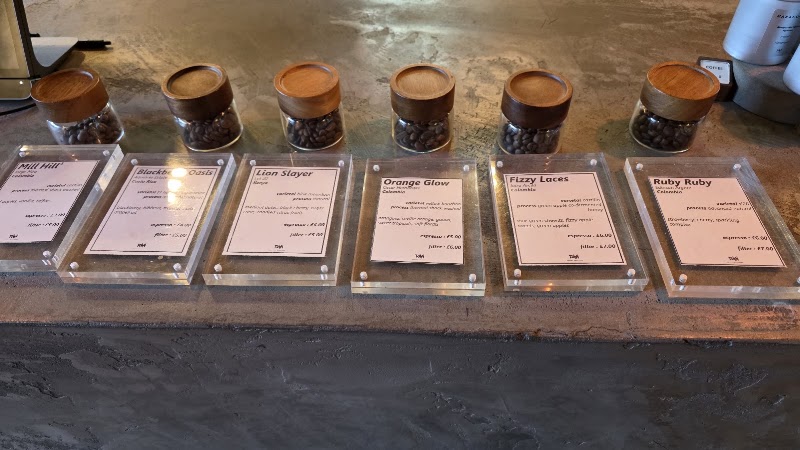
The coffees themselves sit at the adventurous end. Recent offerings have leaned heavily on Colombia and on modern processing — advanced naturals, yeast-inoculated washed lots, co-fermentations with fruit. If those terms mean nothing to you, the practical translation is this: the cups are intensely fruity, sometimes almost confectionery-like, and a long way from the chocolate-and-nuts register most people expect from espresso. Names like Bubblegum and Simply Red are not marketing whimsy; they are a fair description of what turns up in the glass.
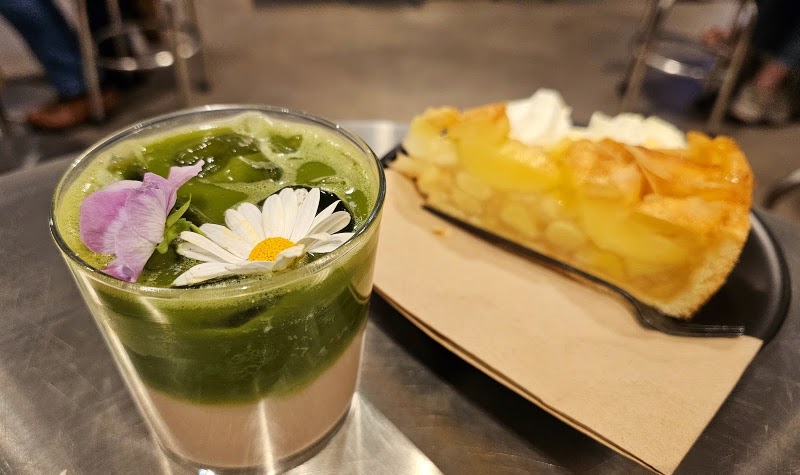
The bar covers both routes into that. Milk drinks are served across the usual range, but the hand-brew and long black end of the menu is where the micro-lots make sense, and it is worth ordering black at least once if you have come for the roasting. Alongside its own coffee the shop also stocks beans from another roastery, so the retail shelf is not purely self-referential. And the non-coffee side is unusually broad for a place this serious: matcha, chai, loose-leaf teas and, without a hint of irony, plain Yorkshire Tea. A roastery that will happily make you a mug of the most ordinary tea in the county is a roastery with its ego under control.
Who’s behind it
Raw is the work of Anya and James Adams, a husband-and-wife team. The concept was Anya’s, and it began as something much smaller — an idea for a coffee kiosk — before growing into a full shop with a roastery attached. The design of the room is hers too, and she has been explicit about where it comes from: the pared-back discipline of Japanese coffee shops on one side, and growing up in 1980s Poland on the other. That is an unusual pair of references for a British café, and it explains an interior that reads as calm and slightly austere rather than cosy.
James came to coffee from retail rather than from hospitality, having worked for a large supermarket chain, and took on the roasting side of the business. That outsider route matters. People who learn roasting inside an established company tend to inherit its house style; people who arrive from outside tend to chase the coffees that excited them in the first place, which is a plausible explanation for a green-buying list this experimental in a shop this small.
The two of them opened in 2024 in a unit that had previously been a hairdresser’s, which is a reminder of how recent the shop is. Everything about it — the size, the roaster, the risk-taking on the coffee list — reads as a young business making its case rather than an institution coasting.
What kind of visit it suits
The clearest use of this place is the deliberate coffee visit. If you care about what is in the cup, this is a shop where asking questions is rewarded: the person serving you can tell you what the roast was doing last week, because the roaster is behind them. Order something black, sit for twenty minutes, and you get an experience that no amount of good sourcing at a buy-in café can replicate.
The second scenario is lunch. Because the food runs on bagels rather than a cake cabinet, this works as a proper midday stop rather than a coffee-and-something-sweet interlude — a useful thing to know if you are between meetings in the business district or killing an hour before a train.
On laptops, be realistic. It is a small shop with a fast weekday trade and a queue at peak, and there is no published policy either way. A focused hour with one drink is entirely normal; treating a table as an office for the afternoon is not what a room of this size can absorb. If you need power and space for a working session, the sensible plan is to come outside the lunch rush and keep it short.
It is also a good solo café. The minimalism, the small footprint and the counter-facing layout make sitting alone with a book feel natural rather than conspicuous — and the ordinary tea on the menu means you can bring a friend who does not drink coffee without apologising for the choice of venue.
The room and the atmosphere
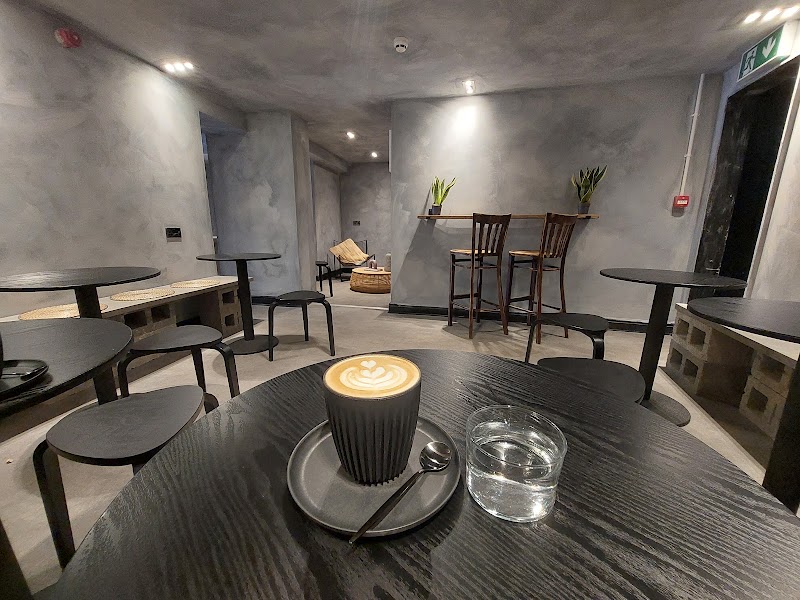
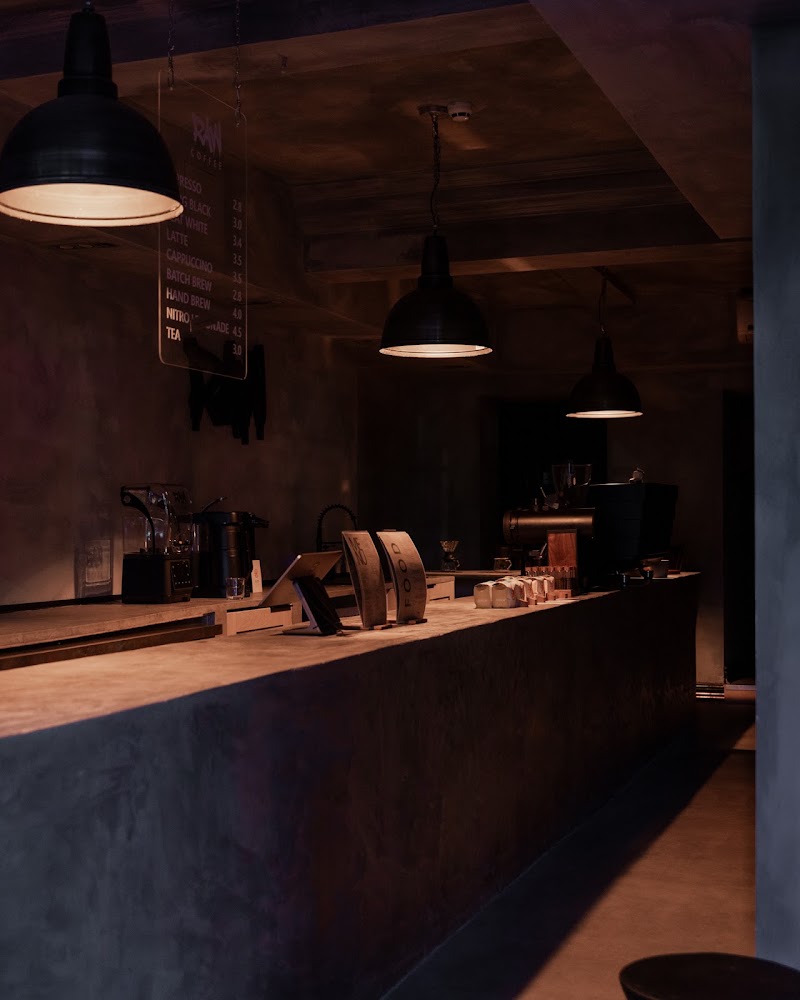
The interior is the most consciously designed of any small café in this part of the city. Polished concrete, dark wooden furniture and a generous quantity of plants, arranged with the restraint the Japanese influence implies — nothing decorative for its own sake, no reclaimed clutter, no chalkboard forest. The result is a room that feels bigger and calmer than its square footage should allow.
It is genuinely small, though, and that is the trade-off. Seating is limited, the acoustics at a busy moment are those of a hard-surfaced room rather than a soft one, and at the weekday peak the queue and the seated customers are sharing very little space. The presence of a roaster in a shop this size also means the room occasionally smells like what it is, which most people will consider a feature.
There is no terrace, and this is an indoor city-centre proposition. What it does have is a good relationship with daylight and a layout that lets you watch the coffee being made, which for the intended audience is the point.
What goes with the coffee
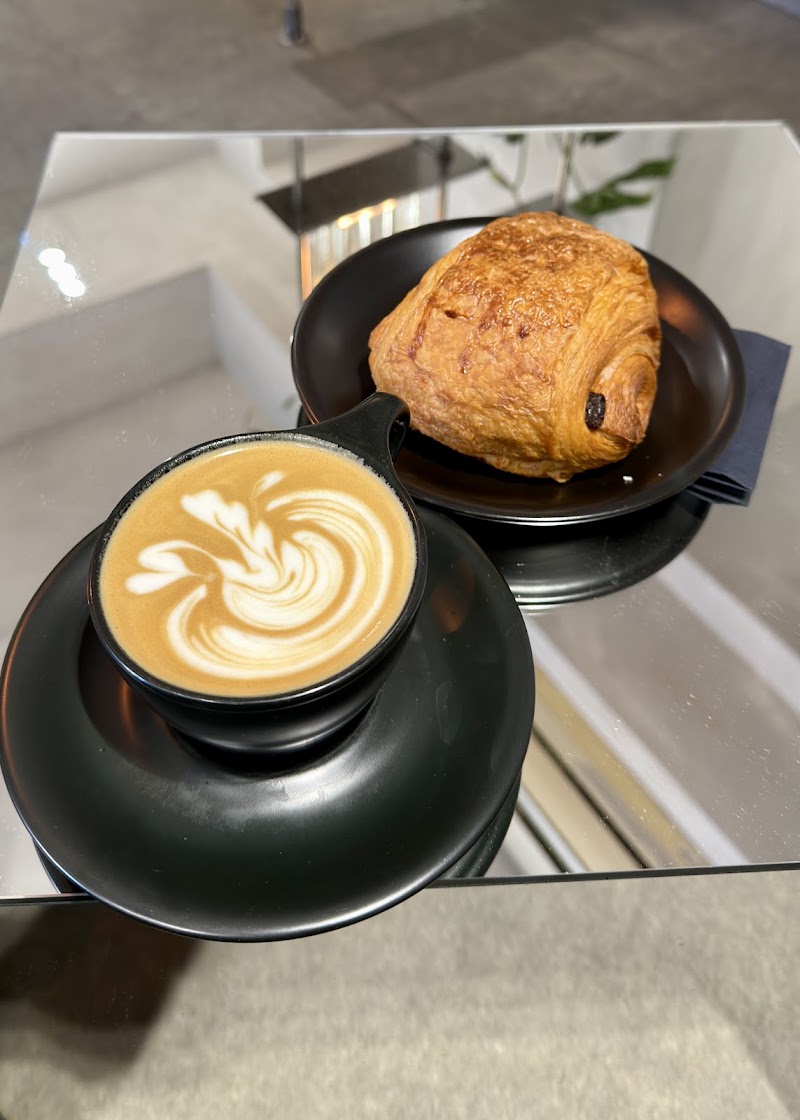
The food splits cleanly in two. The savoury side is built in-house around a short bagel list — six or so builds, ranging from a falafel, beetroot and hummus version to a pastrami one — which is a deliberate choice of format: bagels hold, travel and assemble quickly, and they turn a coffee shop into somewhere you can actually have lunch without a kitchen brigade.
The sweet side is bought in, and bought in thoughtfully. Pastries come from a Sheffield bakery and cakes from a Doncaster maker, which keeps the supply chain inside Yorkshire and means the counter is not competing with the roastery for attention. It is the right division of labour for a small business: do the thing you are best at yourself, and buy the rest from people who are better at it than you would be.
When to come
The shop opens early on weekdays to catch the commuter flow and closes in the late afternoon rather than the evening, so this is a morning-to-afternoon proposition throughout. Weekdays are dominated by the office and station trade — fast at the start of the day, busy again around lunch — while weekends are slower, later-starting and more relaxed, with Sunday the shortest day of the week.
If you want to talk about the coffee rather than just buy it, come on a weekday between the rushes or on a weekend morning. If you are coming specifically to try the newest micro-lot, note that these are small batches by definition: what is on today may be gone in a fortnight, which is an argument for asking what has just come off the roaster rather than repeating last month’s order.
Getting there
Raw sits in the heart of the city centre, a short walk from City Square and the main entrance of Leeds railway station, on the side of the centre where the financial district meets the shops. Coming off a train, it is a few minutes on foot — one of the closest genuinely independent coffee options to the platforms. From the main pedestrianised shopping streets it is an easy five to ten minutes downhill.
Leeds has no underground system, so everything here is walking or bus; the city’s bus routes converge around City Square and the surrounding streets, and the station is the anchor for anyone arriving from further afield. The most reliable landmark is the square itself, with its statues and the big Victorian hotel — from there it is a very short walk.
Good to know
Know what you are ordering. If you drink espresso for its chocolate and caramel end, the house style here — modern processing, high acidity, loud fruit — may not be what you expect, and it is worth saying so at the counter, where they can steer you towards something gentler. Conversely, if you have been looking for coffee like this in Leeds, you have found the shop.
Manage expectations on space. This is a small unit, seating is limited and there is no outdoor area, so at peak you may be waiting or taking away. There is no booking of any kind.
Finally, the shop is young — it opened in 2024 — and the offer is still evolving, particularly the coffee list, which rotates with what has been roasted. That is a feature rather than a flaw, but it does mean a return visit will not be a repeat of the first one. The business does not publish detailed information about dogs, step-free access or power sockets, so check directly if one of those decides your visit.
Questions and answers
Do they really roast on site?
Yes — it is a working micro-roastery as well as a coffee bar, which is rare in central Leeds. The beans in the grinder were roasted in the same building.
What does the coffee taste like?
Bright and fruit-driven. The list leans on modern processing — advanced naturals, yeast-inoculated washes, co-fermentations — so expect intense, sometimes almost sweet-shop flavours rather than a classic chocolate-and-nut espresso.
Who runs it?
Anya and James Adams, a husband-and-wife team. The concept and the design are hers, originally conceived as a kiosk; he moved into roasting from a career in retail.
When did it open?
In 2024, in a city-centre unit that had previously been a hairdresser’s.
Is there proper food?
Yes — a short bagel menu made in-house, which makes it viable for lunch. Pastries and cakes are bought in from bakeries elsewhere in Yorkshire.
What if I do not drink coffee?
You are well covered: matcha, chai, loose-leaf teas and plain Yorkshire Tea are all on the menu, served without any sense that you have ordered the wrong thing.
Can I work here on a laptop?
For a focused hour outside the rush, yes. The room is small and gets busy, no policy is published, and it is not built for all-day working.
Can I buy beans to take home?
Yes, including the shop’s own roasts and beans from another roastery it stocks — so the retail shelf offers a comparison rather than just self-promotion.
How close is it to the station?
Very close — a few minutes on foot from the main station entrance, near the central square. It is one of the handiest independent coffee stops for anyone arriving by train.
Opening hours
| Day | Hours |
|---|---|
| Monday | 07:30–16:00 |
| Tuesday | 07:30–16:00 |
| Wednesday | 07:30–16:00 |
| Thursday | 07:30–16:00 |
| Friday | 07:30–16:00 |
| Saturday | 08:30–17:00 |
| Sunday | 09:00–15:00 |
Photos
Visitor reviews
Reviews last updated: 2026-08-10 17:35:10
Data is refreshed monthly. Sources: leedska.com and editorial picks based on reviews.
Місце, де справді цінують каву. У них є щонайменше 4 купажі кави, які готують у магазині. Ми обрали власний купаж, який непоганий, можливо, не найсмачніший. Персонал привітний. Латте-арт чудовий. Тут досить багато місць…
Мені в цьому місці подобається все! Як у кафе, кава – це справжнє задоволення! Є безліч варіацій, які я ніколи раніше не куштував (я з Індонезії і пробував різні кавові зерна, тому знаю, про що говорю ).
Тістечка та т…
Мені дуже сподобався їхній манговий матча. Гадаю, навіть більше, ніж полуничний, який вони куштували раніше. У нього такий приємний манговий післясмак.
Мій чоловік завжди п'є їхній лате і каже, що він дуже непоганий.
М…
Мої друзі тут постійні клієнти, і коли вони мене запросили, я спочатку скептично поставився до ціни. Однак… це найкращий матча-лате, який я коли-небудь куштував. Як сказали б південноафриканці: «Я відчуваю, ніби ангел…
Я прийшов сюди, очікуючи одного з найкращих кавових вражень у Лідсі, але, чесно кажучи, це не виправдало очікувань.
Простір виглядає дуже мінімалістичним і «в стилі обсмажування», але сидіння справді незручні — здебільш…